


I’ve been trying to figure out how to write this post for a few days now, which is unusual for me, because I am not normally at a loss for words. Ask anyone who’s been in a meeting with me. But something about this past weekend in Toronto felt too big to squeeze into a tidy narrative. That said, I’m going to try anyway, and if it comes out a little rambling and a lot enthusiastic, that’s because it is and I’m not sorry.
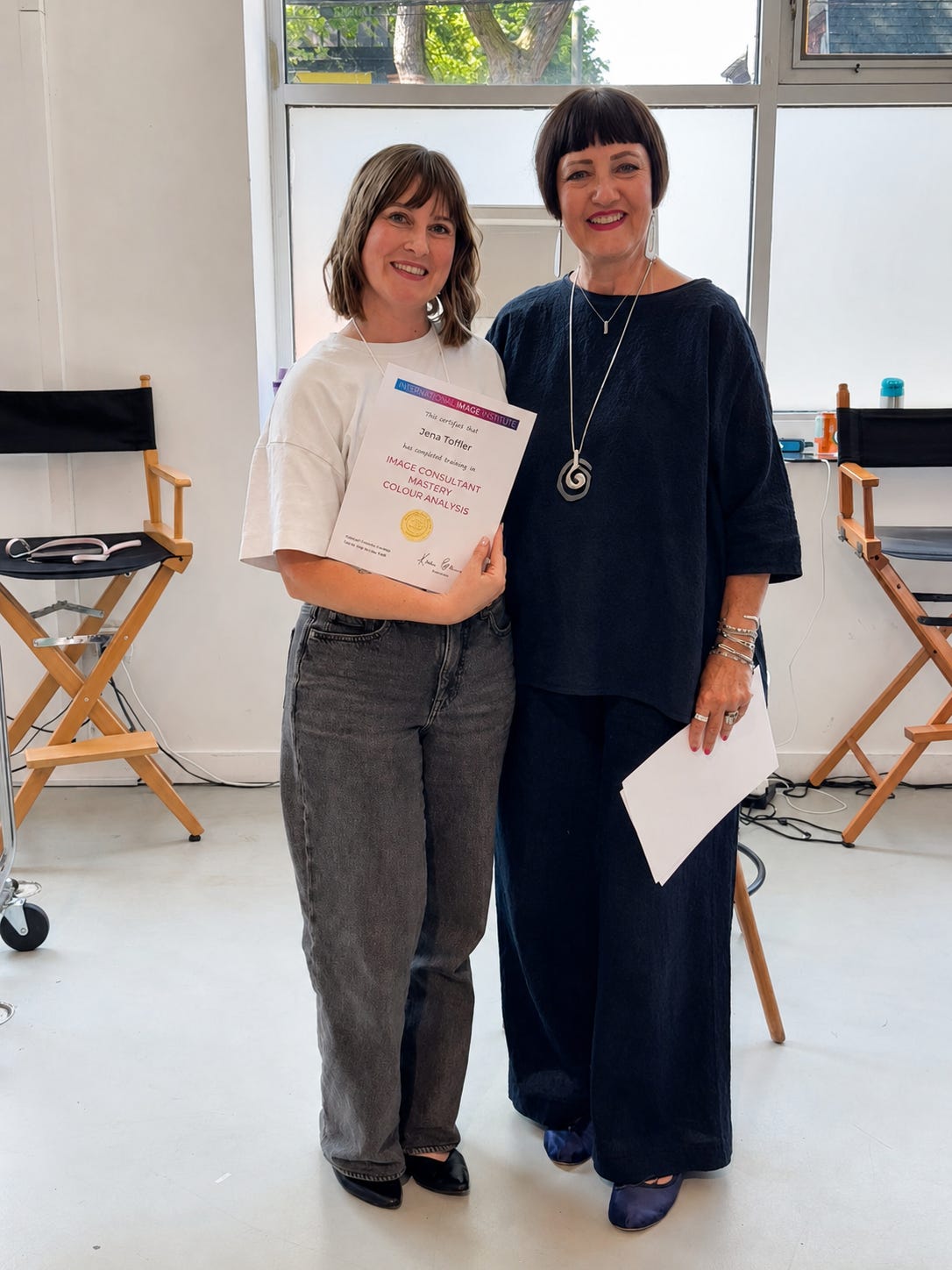
I just completed the Colour Analysis Mastery course with Karen Brunger at the International Image Institute, and I need to tell you everything.
First: why Toronto, and why this course specifically.
When I decided to take Glow Theory from “obsessive personal hobby” to “actual business I am charging people for,” I knew I wanted to train properly. Not a weekend YouTube deep-dive situation, not an online certificate I could acquire without anyone ever watching me hold a drape - a real, rigorous course taught by someone who knows this field inside out. The International Image Institute’s Colour Analysis Mastery program kept coming up as the gold standard, and once I learned who was running it, the decision was easy.
So I booked a flight to Toronto, packed what I now know was not a single item in my correct season (more on that in a moment), and showed up ready to learn.
Let’s talk about Karen Brunger, because honestly, she deserves her own paragraph (several paragraphs!).
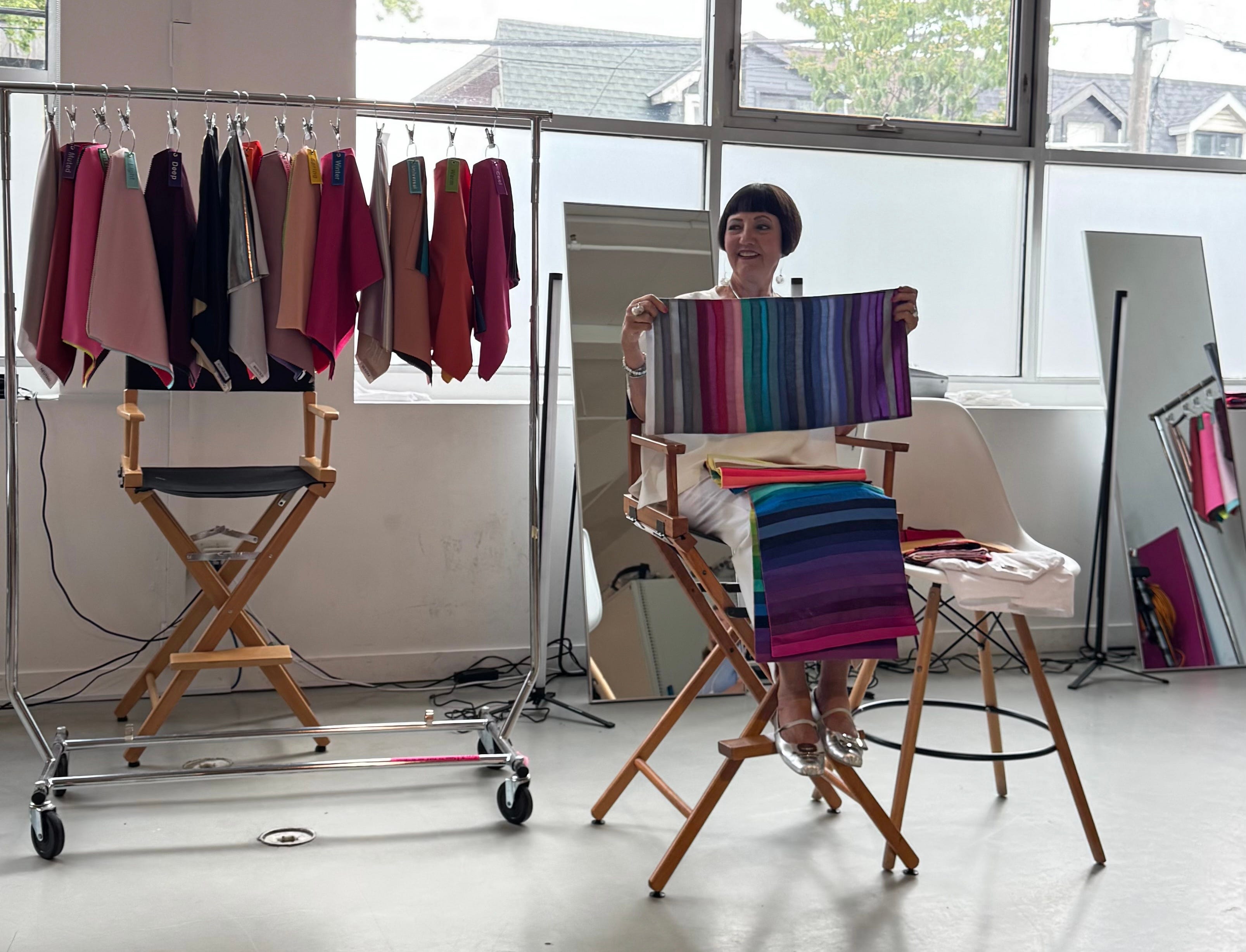
I knew, going in, that Karen was experienced. What I was not fully prepared for was the sheer scope of what “experienced” means in her case. Karen has been working in this field for over forty years. She was among the first people in Canada to be formally trained in seasonal colour analysis, back in 1984 - and when the company that trained her closed its doors, rather than simply moving on, she stepped up and became a trainer herself. That right there tells you everything you need to know about the kind of person Karen is.
Since then, she’s founded and built the International Image Institute, whose systems and products are now used in over 100 countries. One hundred countries. She’s presented on five continents, in fourteen countries. She’s authored sixteen books, co-authored four more, developed forty-five colour and image tools, and created an entire colour palette app called Colorology™. She also coined the phrase “the ABCs of image consulting” - appearance, behaviour, and communication - which is now used as a framework by image consultants all over the world. She’s a past president of the Association of Image Consultants International (AICI), and served four years as its VP of Education. She’s not a person who has been around colour analysis for a long time. She’s a person who has, in many meaningful ways, shaped what colour analysis looks like today.
I say all of this not to intimidate you (or to show off that I know impressive people now, though I am doing that a little), but because I want to paint an accurate picture of what it means to be in a room with her. The knowledge is extraordinary. What I didn’t expect was how she carries it. Karen is warm, funny, endlessly patient, and so clearly delighted by this work that it’s impossible not to catch the feeling. She doesn’t lecture. She teaches, which is a meaningfully different thing. She explains the “why” behind every step, answers every question without making anyone feel silly for asking it, and has this remarkable ability to translate decades of expertise into something that feels completely accessible even when it’s technically complex. I walked in a little intimidated and left feeling like I’d spent three days with someone who actually wanted me to succeed at this. Because she did.
Being taught by someone like that is a gift. I mean that without any exaggeration whatsoever.
The group - because this part surprised me too.
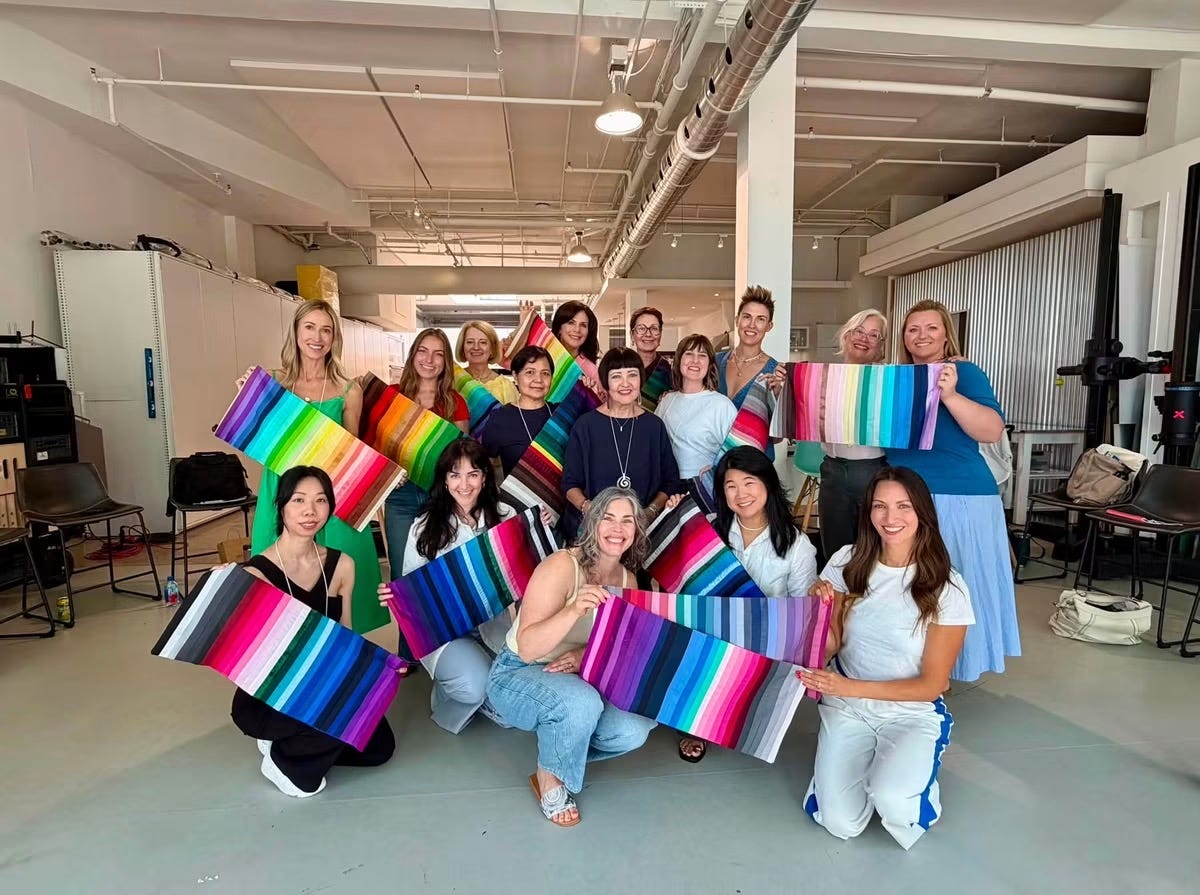
I wasn’t sure what to expect from my fellow students. I’d hoped for a decent group, maybe a few people I’d exchange LinkedIn connections with and politely never contact again. What I got instead was about fifteen women who were, without exception, warm, funny, enthusiastic, and exactly the kind of people you want in your corner when you’re learning something new.
There is something specific about learning an interpersonal skill like colour analysis in a group setting that you just can’t replicate on your own. You’re practising on each other. You’re watching each other’s faces change when a drape hits right. You’re collectively gasping when the warm versus cool difference is suddenly, unmistakably obvious. You’re also slightly commiserating when a practice session is harder than expected and the “obvious” answer turns out to be less obvious when it’s your turn to call it. We got through all of that together.
By the end of the weekend, I truly felt like these women are going to be my and each other’s biggest supporters as we all move forward in this work - and in this industry, which can be solitary once you’re out on your own, having that network matters. I came home with knowledge, materials, and fifteen new colleagues I’m pretty excited about.
Practising the actual thing - in person, on real humans.
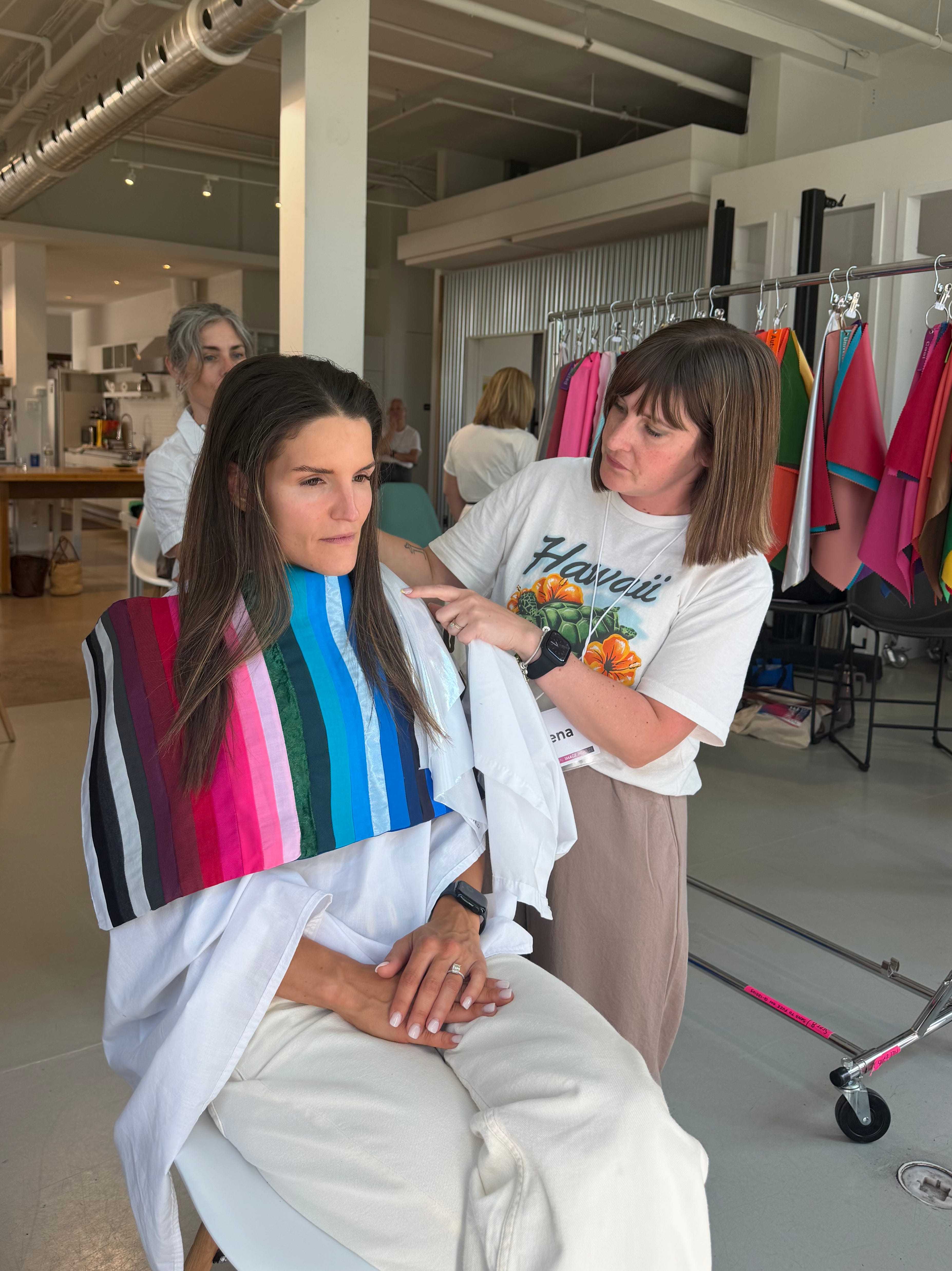
Here’s the thing about learning colour analysis from online resources and doing it in a room under proper conditions with real drapes and a trained educator watching you: they are related, but not the same. Not even close.
In person, you train your eye in a way that’s almost impossible to replicate digitally. You see, live, what a warm drape does next to cool undertones versus warm ones. You notice the subtle shift in someone’s under-eye shadows, the way their skin either evens out or shows more irregularity, the way their eyes either pop or quietly retreat depending on what colour is near their face. You get corrective feedback in real time - “look at her jaw here, watch what happens to the shadow when we switch” - from someone who has been seeing exactly these reactions for four decades.
That live, in-person practice was the part of the course I was most nervous about and it turned out to be the most affirming part of the whole experience. My eye is better than I thought. My instincts, when I trust them rather than second-guessing every assessment, are largely right. That’s not something I could have known without actually doing it, under conditions where the drapes and the light and the person in the chair are all real, right in front of me. I walked out of that room feeling like I can actually do this. Not just theoretically. Actually.
The drapes. Oh, the drapes.
At the end of the course, I picked up my full set of draping materials. All of them. The ones I’m going to use in actual client sessions.
I have now carried them home on a plane, set them up in my living room, and stared at them for a probably-embarrassing amount of time. There is something about having the physical materials in your hands - holding the actual fabric, seeing the full sequence laid out - that makes it feel real in a way that even completing the coursework didn’t quite manage. It’s happening. I have the things. I’m doing this.
If you see me in public in the near future looking slightly dazed and occasionally narrating the undertone of strangers’ outfits under my breath, please be patient. I am adjusting.
And then there’s the part where I found out I’m a True Summer.
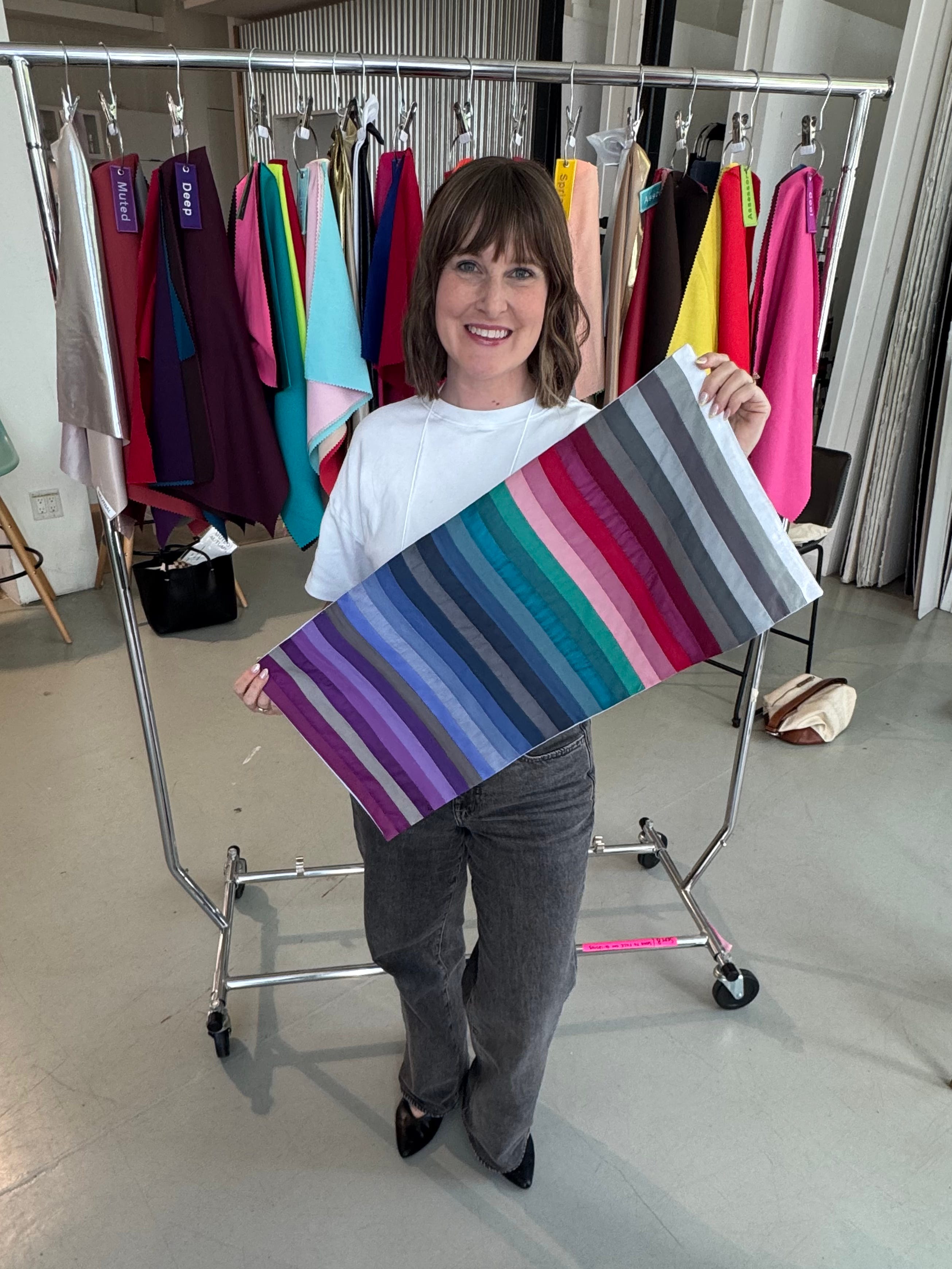
I know. After all of this - all the posts about undertones and seasonal palettes and “your colours are fixed and stable and set from birth” - I came home having been properly, formally, definitively typed for the first time, and reader, I have some wardrobe changes to make.
True Summer, for anyone who wants the summary: cool undertones, soft and muted colouring, lower contrast, the whole palette built around dusty roses, soft blues, lavenders, soft berry tones, muted teals and sages. Beautiful colours, all of them. Decidedly not the bright, slightly-too-much-for-a-summer-complexion colours I’ve been gravitating toward because I liked how they looked on a hanger.
The good news is that True Summer is a lovely, flattering season and the palette suits me in a way I can now see clearly with my newly trained eye. The less-good news - or at least the “mildly amusing in retrospect” news - is that I flew to Toronto in a Bright Spring top, arrived home with my True Summer analysis in hand, and immediately stood in front of my wardrobe understanding, probably for the first time, why roughly forty per cent of what I own has never quite felt right. It wasn’t the clothes. It was me. Wearing the wrong colours. For years.
My hair, as it currently stands, is also not quite aligned with my season. I’m going to be making some adjustments.
Slowly. On a budget. In an order that makes logistical sense. But still.
What comes next.
I am so ready to bring this to clients. That’s the thing I keep coming back to, underneath all the excitement about drapes and the mild horror about my own wardrobe: the whole point of this was always to be able to share it. To sit across from someone who’s been getting dressed on autopilot and feeling vaguely wrong about it for years, and show them, visibly, immediately, what changes when the colour is right. Karen showed me this weekend just how powerful that moment is when it’s done properly. I want to be able to give that to people.
Bookings are open now! I have my drapes, my materials, my certification, and - new as of this weekend - an eye that has been properly trained on real people in real conditions by one of the best in the business.
Let’s find your colours.